This page contains affiliate links. If you purchase through our links, we earn a small commission at no extra cost to you. This never influences our recommendations — we only feature products we have tested and believe in. Read our full disclosure.
The Direct Answer
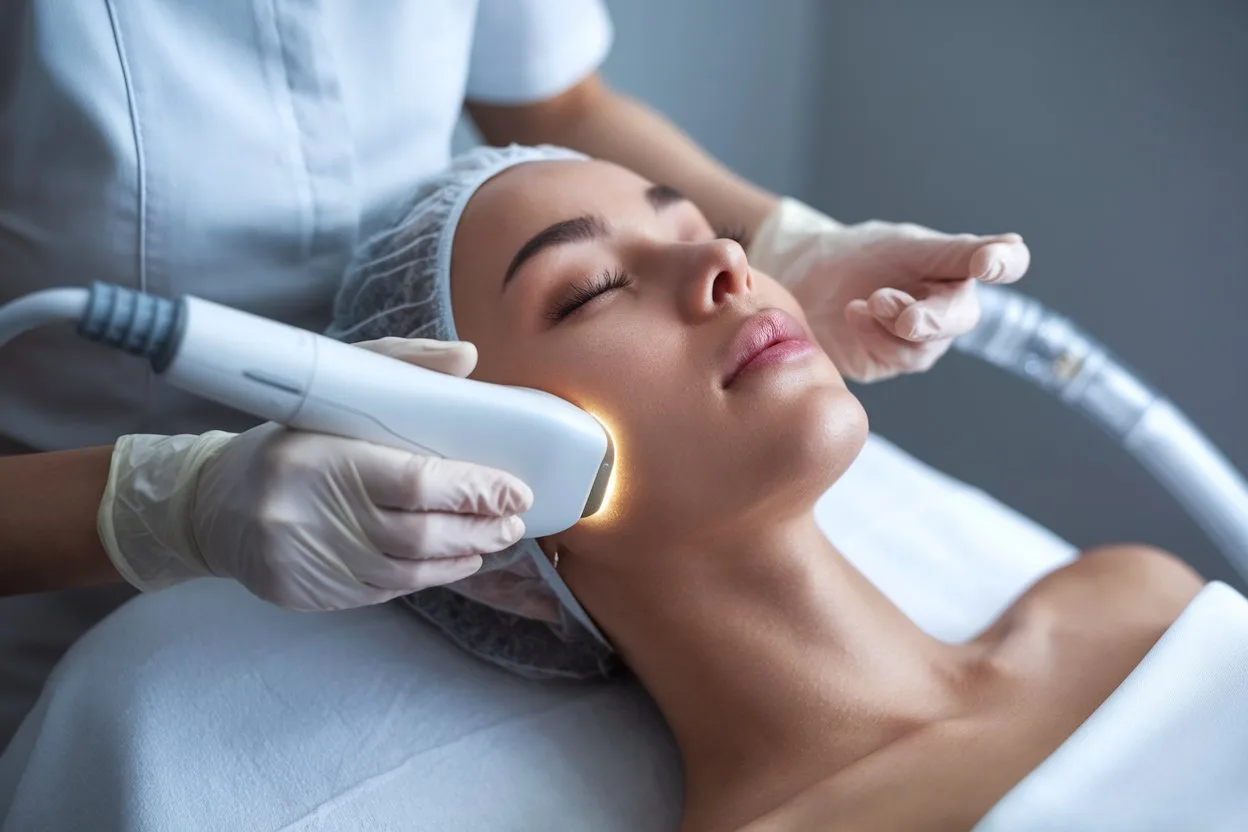
Yes — laser hair removal can permanently eliminate ingrown hairs in treated areas. Because the treatment destroys the hair follicle itself, there is no hair to grow back and no ingrown hair to form. For people with chronic, severe ingrown hairs — particularly on the face, neck, or bikini area — laser is often the most cost-effective long-term solution when factored over years of product spending. (One common practical question: can you have a session if you currently have active bumps? Our walkthrough on lasering with active ingrown hairs covers when to proceed and when to wait.)
The caveat is candidacy. Laser works by targeting melanin in the hair follicle and requires meaningful contrast between hair colour and skin tone. Results also require multiple sessions and are not instant.
How Laser Hair Removal Works
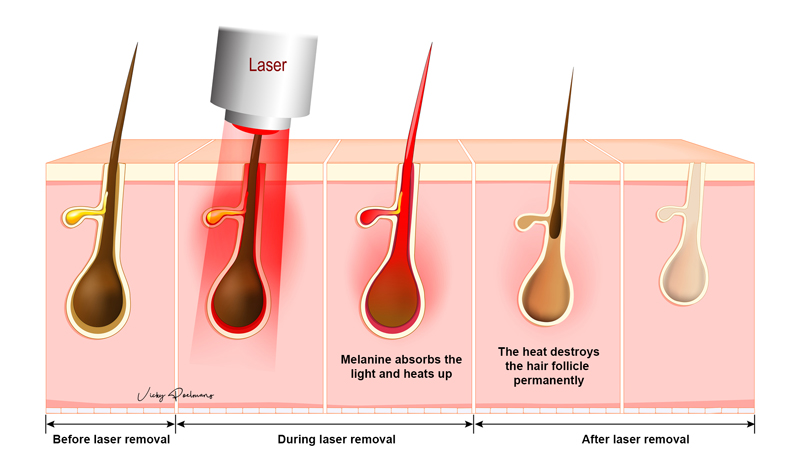
Medical-grade lasers emit a concentrated beam of light at a specific wavelength selectively absorbed by melanin — the pigment in hair. The light energy converts to heat, which damages the hair follicle's growth cells without significantly affecting surrounding tissue. A damaged follicle either stops producing hair entirely or produces finer, lighter hair far less likely to become ingrown.
Why the standard 4-6 week schedule fails for some bodies, and the timing protocol that actually prevents ingrown hairs through your full course.
Because only a percentage of follicles are in the active growth phase (anagen) at any given time, multiple sessions are required to catch each follicle during its vulnerable window. This is why 6–8 sessions, spaced 4–6 weeks apart, is standard protocol.
Ingrown hairs require a hair to exist in order to form. Laser removes the hair at the source. Even in cases where laser doesn't achieve complete removal, remaining hairs are typically finer and softer — far less likely to curl back into the follicle or pierce through the skin wall.
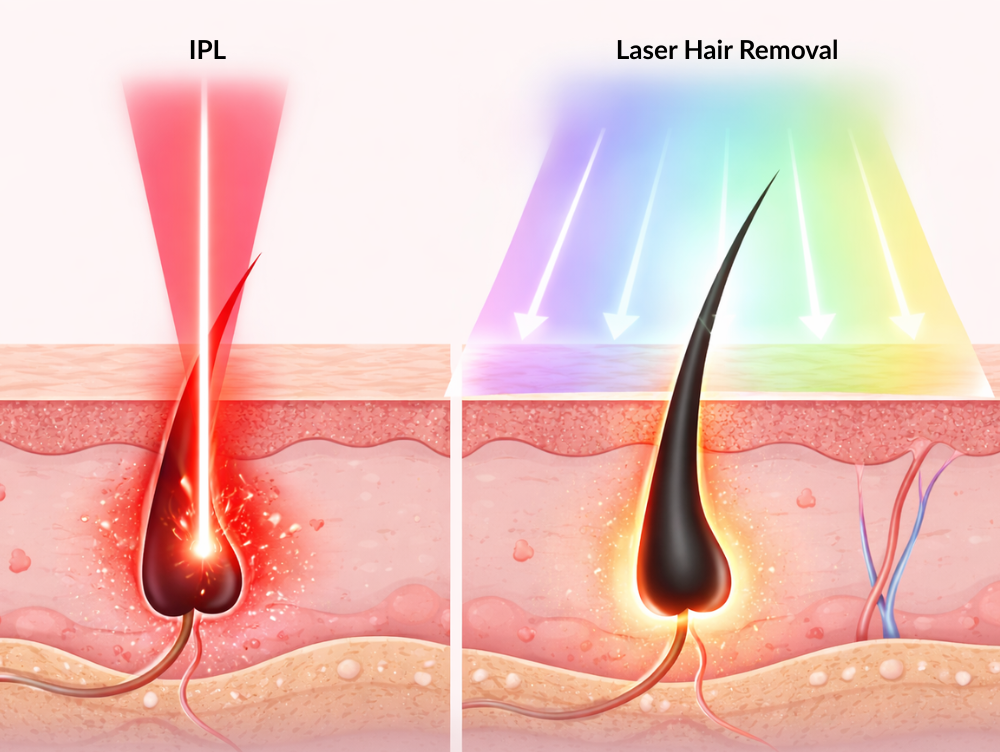
Laser vs. IPL: What's the Difference?
- Single precise wavelength
- Higher energy, deeper penetration
- Suitable for wider range of skin tones
- Nd:YAG safe for darker skin (Fitzpatrick IV–VI)
- Performed by licensed practitioners
- Higher per-session cost ($100–$400+)
- More effective per session — fewer total needed
- Broad-spectrum light — not a true laser
- Lower energy, more diffuse
- Best for lighter skin, darker hair only
- Available in at-home devices
- At-home cost: $200–$500 one-time
- Requires more sessions for comparable results
- Not recommended for dark skin tones (burn risk)
Am I a Candidate?
Candidacy is determined primarily by contrast between hair colour and skin tone. The greater the contrast — dark hair, light skin — the more effectively the laser targets the follicle without affecting surrounding skin.
Ideal candidates: Dark brown or black hair with light to medium skin (Fitzpatrick types I–III) achieve the best results with most laser types. This range of candidates has access to the broadest selection of technology.
Darker skin tones: Fitzpatrick types IV–VI are absolutely candidates but require the correct laser type. Nd:YAG lasers operate at a longer wavelength (1064nm) that passes through skin melanin to target the deeper follicle — safe and effective when used by an experienced practitioner. Avoid clinics that only offer Alexandrite or IPL for darker skin.
Light or red hair: Laser has limited effectiveness on grey, white, blonde, or light red hair due to insufficient melanin in the follicle. At-home IPL devices are essentially ineffective on these colours.
Pregnancy: Laser is typically deferred during pregnancy out of caution — there's no firm evidence of harm, but most clinics will not treat pregnant patients. Our pregnancy-specific protocol covers safe alternatives for the meantime.
At-Home IPL: Is It Worth It?
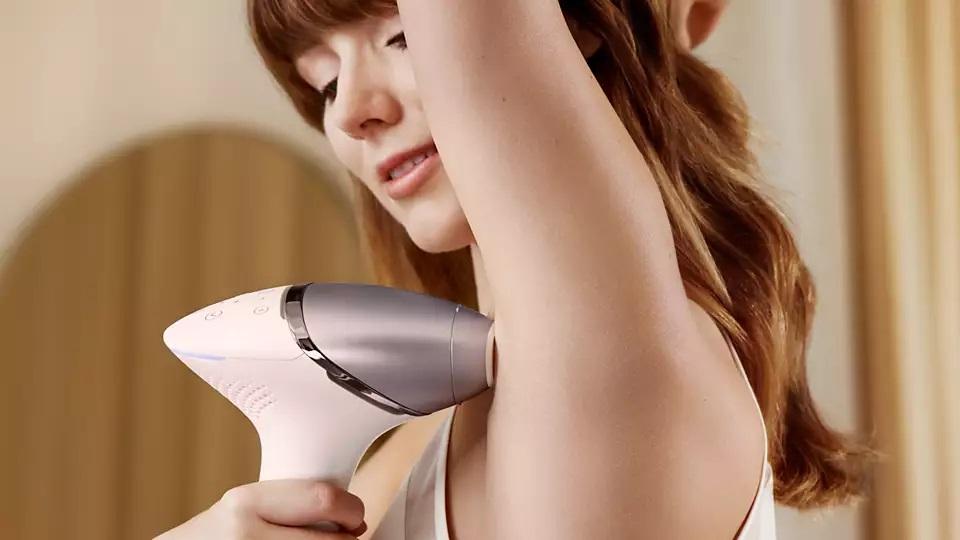
For the right candidate — light to medium skin with dark hair — at-home IPL genuinely works and represents excellent long-term value compared to clinic costs. The tradeoff is more sessions over a longer period. For the bikini area or underarms, many people prefer to manage this privately at home.

Skin-tone sensor auto-adjusts intensity for safety. 400,000 flashes for a lifetime of use. FDA-cleared. Best for Fitzpatrick types I–IV with dark hair.
What to Ask at a Clinic Consultation
Which laser type do you use? The answer must be specific — Nd:YAG, Alexandrite, or Diode. "State-of-the-art technology" is not an answer.
Is the operator licensed? In most jurisdictions, laser should be performed by or under the supervision of a licensed medical professional. Evasiveness here is a red flag.
Do you have experience with my skin tone? For darker skin especially, you want evidence of experience with Nd:YAG on similar skin tones — not just reassurance.
What is your pricing structure? Reputable clinics price per session or offer clear package deals. Be cautious of pressure to commit to large upfront packages before a consultation.
"For patients with pseudofolliculitis barbae — chronic ingrown hairs from shaving — laser hair removal is genuinely curative in a way that no topical product can match. I recommend it to suitable candidates without hesitation."
Auto skin-tone sensor, 400,000 flashes, FDA-cleared. Most effective consumer IPL device we've tested.
Reliable results at a lower price point. Multiple attachments for face, body, and bikini line. Good entry-level option.